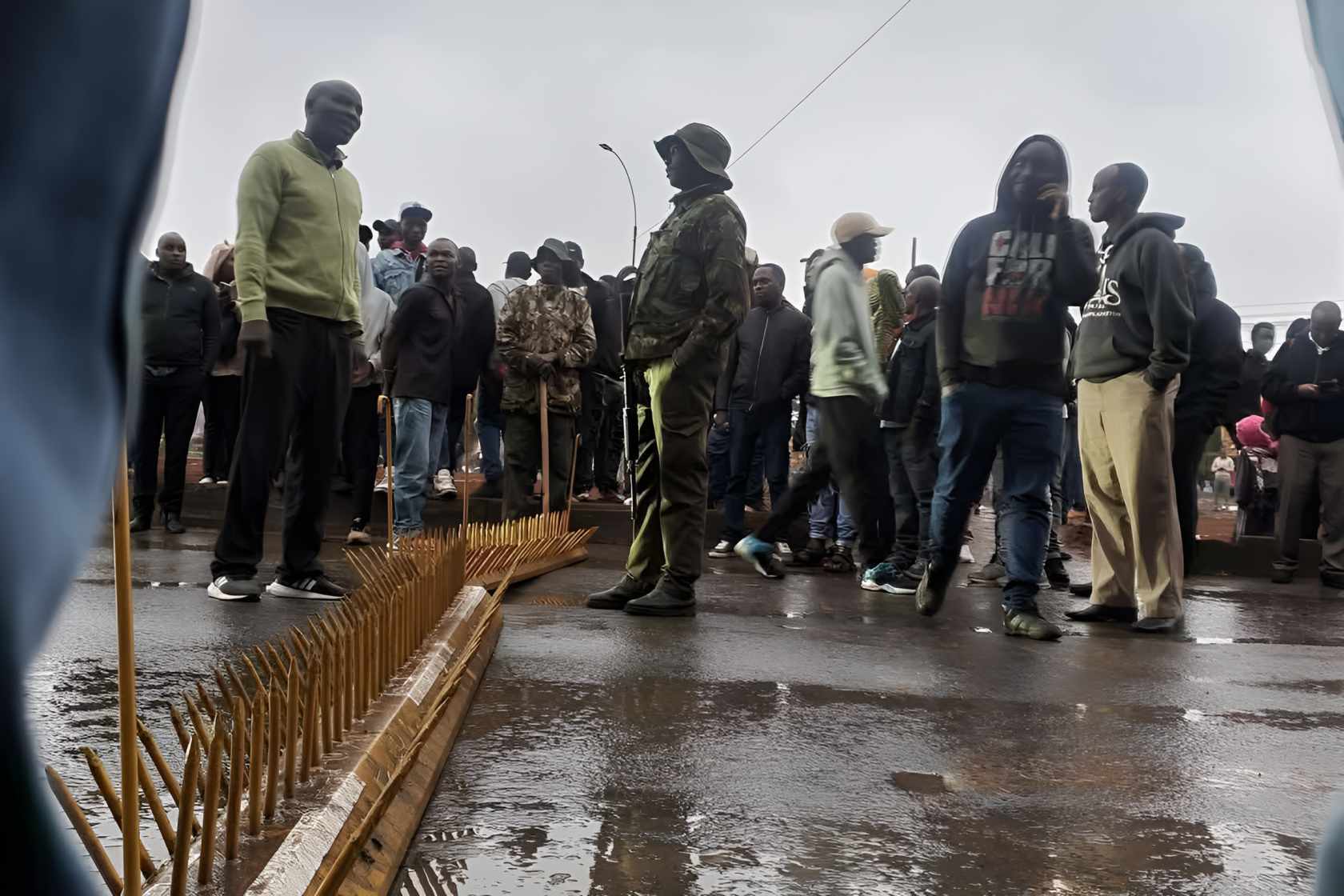
Kenya’s human rights record has come under renewed international scrutiny after the government failed to respond to two formal letters from the United Nations (UN) Special Rapporteur on Human Rights Defenders, who raised alarm over alleged abductions, enforced disappearances, and the violent suppression of anti-Finance Bill protests.
The UN Special Rapporteur, Mary Lawlor, said the Kenyan authorities’ continued silence on the matter reflects a worrying disregard for international human rights obligations, warning that the UN may be forced to raise the issue publicly if no explanation is provided.
Lawlor’s first letter, sent on October 1, 2024, sought the government’s response to claims of arbitrary arrests, detentions, and deportations of human rights defenders and activists who were part of demonstrations against the controversial Finance Bill 2024.
The communication also questioned the use of excessive force by police when protesters stormed Parliament on June 25, 2024.
“The letters sought to bring to the attention of your Excellency’s Government information we have received concerning alleged violations of human rights defenders, media, and civil society,” Lawlor stated in her correspondence.
After months without feedback, she sent another letter on August 5, 2025, highlighting the continued targeting of activists and protestors during commemorations of the June 25 protests, but again, there was no acknowledgment or reply from Nairobi.
“I wrote to the government of Kenya about the arrest, detention, deportation and prosecution of human rights defenders as part of a wider crackdown on peaceful protests. I regret not having received a response,” Lawlor posted on her X account. She added that many protestors were still missing and unaccounted for.
Former Attorney General Justin Muturi distanced himself from the issue, saying, “I am not aware of the letter. I left the Attorney General’s office on July 11, 2024.”
The UN rapporteur warned that if Kenya maintains its silence, the UN could make the communications public and outline its concerns formally. “We are considering publicly expressing our concerns in this case in the near future, believing that the wider public should be informed about the implications of these allegations for the enjoyment and exercise of human rights in Kenya,” she stated.
Investigations by the Independent Policing Oversight Authority (IPOA) have linked security agencies to numerous cases of excessive force, including fatal shootings, serious injuries, and abductions during the demonstrations.
Lawlor reminded the government that Kenya is bound by the International Covenant on Civil and Political Rights (ICCPR), which it ratified on May 1, 1972, guaranteeing protection from arbitrary arrest, detention, and torture.
“The allegations regarding the crackdown on protestors raise serious concerns over grave violations of international human rights law that may cause irreparable damage to the life and personal integrity of those involved, which we believe warrants prompt attention,” Lawlor noted.
In her communication, she cited the arrests of human rights defenders Mark Amiani, Mulingwa Nzau, Francis Mutunge Mwangi, and Boniface Mwangi, along with the deportation of Ugandan lawyer and activist Martin Mavenjina. The UN also condemned the violent disruption of a Kenya Human Rights Commission (KHRC) press briefing by unidentified attackers who acted in the presence of police officers.
Lawlor asked Kenya to clarify how many people were detained, whether they had been charged, if they had access to legal representation, and whether any investigations had been conducted into reported disappearances. She emphasised the need for accountability if the allegations are verified.
The UN further reported that the government deployed National Intelligence Service (NIS) and Directorate of Criminal Investigations (DCI) officers to monitor social media and track activists during the June 2024 protests, actions that allegedly led to the disappearance of several protesters who were later found in undisclosed locations or subjected to physical assault.
Between June 18 and 20, 2024, about 400 to 500 protesters were arrested, two people were killed, and more than 200 others injured in clashes with police.
When the government failed to engage civil society on the Finance Bill, human rights groups launched the “7 Days of Rage” protests starting June 21, 2024.
The UN also criticised Kenya’s attempts to control media coverage during the June 25, 2025, protests, where several TV stations were prevented from broadcasting live.
The Communications Authority of Kenya issued a directive halting live coverage, a move later suspended by the High Court, citing possible violation of constitutional freedoms.
Among those arrested, Amiani, Nzau, and Mutunge Mwangi were charged with incitement, property damage, and theft before being freed on bail pending investigation.
Boniface Mwangi’s home was raided and he was charged with illegal possession of ammunition, while Mavenjina was deported on July 5, 2025, shortly after landing at Jomo Kenyatta International Airport, without access to legal counsel.
Lawlor said the arrests and intimidation of activists reflect a systematic attempt to silence civil society. “These measures create a hostile environment, generate fear, and prevent them from carrying out their work,” she said.
The UN argued that such actions contravene Kenya’s obligations under international law, particularly rights to free expression, peaceful assembly, and association. “Any restriction on freedom of expression and peaceful assembly must be narrowly defined, proportionate, and necessary in a democratic society. The allegations suggest these principles were not followed,” the UN letter read.
If the government continues to disregard the UN’s communication, Kenya risks diplomatic fallout, possible aid cuts, and further damage to its global image on human rights and governance.





























Comments
Sign in with Google to comment, reply, and like comments.
Continue with Google